How Thematic Storytelling Layers Influence Reward Unlocking Sequences in Portable Reel-Based Simulations

Portable reel-based simulations integrate narrative frameworks directly into core mechanics, and these frameworks shape how rewards become available during play. Developers construct multiple storytelling layers that include visual motifs, character arcs, and environmental shifts, each calibrated to trigger specific unlocking events in the reel system. Data from industry tracking services indicate that such layered designs appear across a growing share of titles released for mobile platforms in 2026, with several updates rolling out during July of that year.
Core Components of Thematic Layers
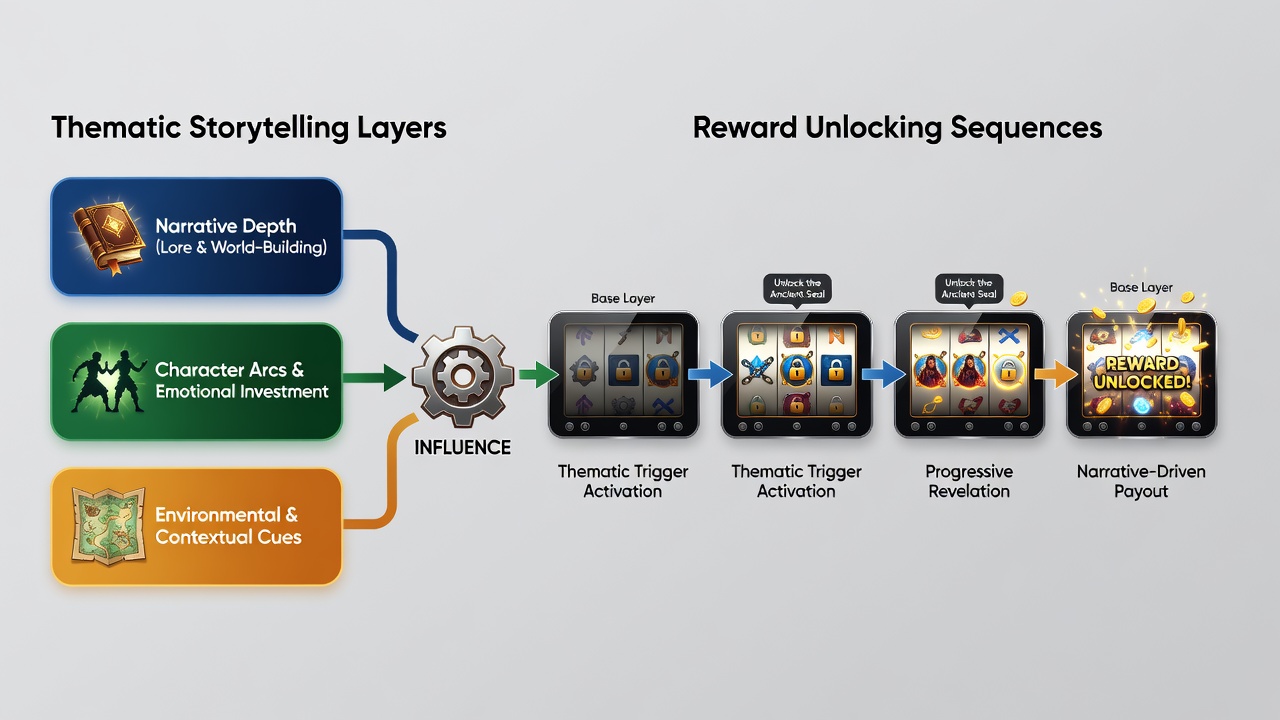
Storytelling in these simulations operates through stacked elements rather than isolated features. Background artwork establishes an initial setting while symbol sets advance a secondary plot thread, and audio cues mark transitions between stages. Researchers at institutions such as the University of Nevada, Reno have documented how these elements combine to form progressive sequences, where completion of one narrative segment directly enables new reel modifiers or bonus states. The structure creates a chain reaction: early symbols may introduce a conflict, mid-game combinations resolve part of that conflict, and later unlocks deliver the resolution through expanded reel grids or multiplier tables.
Visual and Narrative Integration
Visual layers receive the most direct mapping to reward access. When a simulation presents a quest-style theme, scattered icons representing story items accumulate across spins until a threshold activates a dedicated feature round. This mechanic appears in titles that emphasize exploration or collection, and operators report measurable differences in feature activation rates compared with non-narrative counterparts. Animation sequences further reinforce the connection by displaying incremental progress toward the next unlock, turning the reel window into both a gameplay surface and a story display.
Audio layers operate in tandem with visuals. Distinct musical shifts or sound effects coincide with reel stops that meet narrative criteria, signaling that a new reward pathway has opened. Studies conducted by the Canadian Institute for Gaming Research show correlations between synchronized audio-visual cues and the frequency of players reaching deeper unlocking stages within single sessions.
Mechanics of Reward Unlocking Sequences
Reward sequences follow predictable patterns once thematic layers are established. Base-game spins generate story fragments that feed into a meter or collection system; when the meter fills, the simulation transitions into a modified reel state with altered paytable values or added wild positions. The transition itself constitutes the unlock event, and the thematic layer determines both the visual presentation and the mathematical parameters of the new state. In several documented cases from July 2026 releases, developers tied unlock thresholds to chapter-like divisions within the overarching narrative, so each completed chapter alters the reel configuration permanently for the remainder of the session.
Portable formats introduce additional constraints that influence how these sequences unfold. Screen size limits the simultaneous display of narrative elements, which leads designers to prioritize sequential reveals over parallel information streams. Touch input further affects pacing, since players control spin initiation directly and can therefore accelerate or pause the story progression according to their interaction rhythm. Figures released by the Australian Interactive Gambling Council illustrate that mobile users encounter thematic unlocks at higher rates during shorter, repeated sessions than during extended single sittings.
Observed Patterns Across Title Categories
Different thematic genres produce distinct unlocking rhythms. Adventure-oriented simulations often space major rewards farther apart, using cliffhanger moments to maintain tension between chapters. Fantasy themes, by contrast, tend to introduce frequent minor unlocks that accumulate into larger transformations. Industry reports compiled by the European Gaming and Betting Association note that both approaches maintain consistent mathematical return profiles while varying the distribution of feature entry points. Observers note that the choice of thematic pacing correlates with regional player preferences tracked through aggregated telemetry, though the underlying reel mathematics remain governed by regulatory testing standards in each jurisdiction.
Cross-layer interactions add complexity to the sequences. A visual change triggered by one narrative thread can simultaneously alter the probability weighting of symbols tied to a separate audio cue, creating compound unlock opportunities. This interplay has been examined in technical papers presented at gaming technology conferences, where developers describe the need for precise synchronization to prevent unintended reward clustering. In practice, the result is a system where players experience narrative advancement and mechanical reward as intertwined rather than separate processes.
Conclusion
Thematic storytelling layers in portable reel-based simulations function as structural frameworks that determine when and how reward sequences activate. Visual, auditory, and narrative components combine to create measurable pathways from base play to modified reel states, with design choices affecting activation frequency and session structure. Data compiled through regulatory and research channels continue to track these patterns as new titles enter the market, providing ongoing insight into the relationship between story architecture and mechanical outcomes.