Time-Based Reward Calibration Techniques in Wireless Platforms Merging Live Interaction with Reel Mechanics
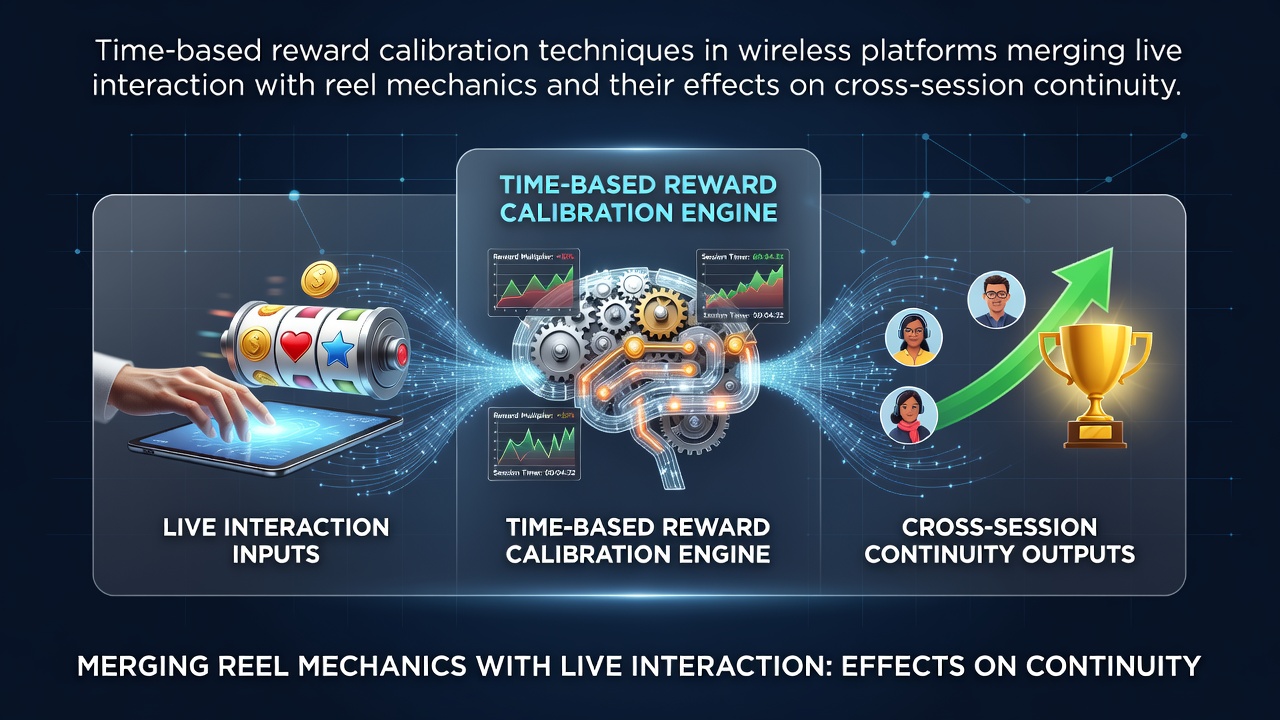
Wireless platforms that combine live dealer streams with reel-based mechanics rely on time-based reward calibration to maintain engagement across multiple sessions. These systems adjust reward frequency and value according to elapsed time since the previous login, session duration patterns, and interaction sequences between video elements and live feeds. Data from platform analytics shows that calibration algorithms track intervals ranging from minutes to days, then scale bonus multipliers or unlock probabilities to encourage returns without disrupting ongoing play.
Core Mechanisms of Time-Based Calibration
Calibration engines process timestamps from user activity logs and apply decay functions to reward pools. When a player logs in after a 48-hour gap, the system elevates reel trigger rates for hybrid bonus rounds that link live card draws to slot outcomes. Shorter intervals trigger smaller but more frequent adjustments, such as incremental jackpot contributions that carry over between sessions. Researchers at the University of Sydney documented similar interval-based scaling in mobile entertainment applications during 2025 trials, noting consistent patterns in how elapsed time influences next-session behavior.
Live interaction segments feed real-time data into the same calibration layer. A dealer-hosted table round that ends at a specific moment can set a decay timer for associated reel features, so the next login receives adjusted prize escalation tied to that earlier result. This linkage creates continuity because players encounter familiar progress markers rather than reset states.
Integration of Live Feeds and Reel Systems
Hybrid interfaces synchronize live video streams with reel animations through shared timers. When a live dealer completes a hand, the platform converts outcome data into reel spin modifiers that activate after a calibrated wait period. Observers note that this approach prevents immediate repetition while preserving momentum from the live segment. Reel mechanics then inherit parameters such as volatility settings or multiplier caps that reflect time elapsed since the live event concluded.
Platform operators implement these merges through API calls that pass session metadata between the live module and the reel engine. July 2026 updates to several wireless gaming frameworks introduced refined decay curves that respond to both absolute time gaps and relative session density, allowing smoother transitions for users who alternate between live tables and automated reels within the same account.

Impact on Cross-Session Continuity
Cross-session continuity improves when reward calibration aligns user expectations across separate logins. Studies from the Australian Institute of Family Studies indicate that platforms employing time-sensitive adjustments report higher rates of session resumption within defined windows compared with static reward models. The calibration layer stores persistent variables such as accumulated reel progress or live-triggered multipliers, then reapplies them at rates that account for the length of the intervening period.
One documented technique uses exponential smoothing on reward eligibility scores. After each session the score updates based on total active minutes and time since logout, producing a value that determines the intensity of the next hybrid event. This method keeps reel features and live interactions connected even when players switch devices or operating systems, because the underlying score travels with the account rather than the hardware session.
Technical Implementation Patterns
Engineers deploy these techniques through server-side scripts that query time-series databases at login. The scripts calculate adjustment factors and push updated parameters to both the live streaming client and the reel rendering module. Canadian regulatory filings from 2026 describe similar architectures where calibration occurs before any visual assets load, ensuring consistent state across wireless connections of varying quality.
Additional layers monitor interaction velocity within the merged environment. Rapid switches between live dealer choices and reel spins receive different calibration weights than slower, deliberate sequences. This velocity data refines future reward timing so that continuity feels responsive to individual pacing rather than uniform across all accounts.
Conclusion
Time-based reward calibration in wireless hybrid platforms operates through timestamp analysis, decay modeling, and synchronized parameter passing between live and reel components. These processes support continuity by preserving and scaling progress markers across login intervals. Figures from industry reports and academic examinations continue to track how such techniques evolve with platform updates, particularly those rolled out around mid-2026. National Council on Problem Gambling research summaries and Australian Gambling Research Centre publications provide further data points on retention metrics tied to interval-based systems.